Interview with Dr. SEO fuNNNky Expert, Forensic Hair Analyst — Criminology Hair and a Stranger in a Southeast Asian Escape Room
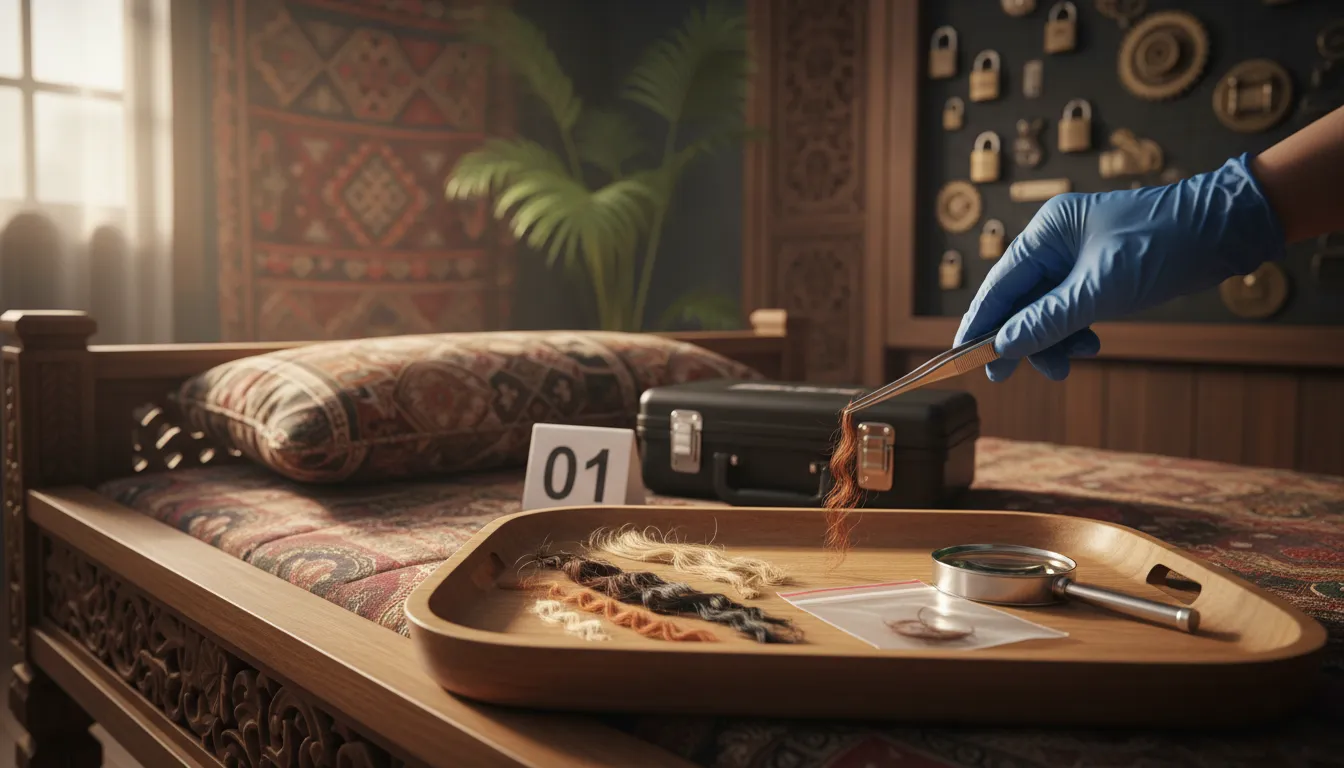
This documentary-style interview explores a curious scene: a travel blogger wakes in a rented blogger room inside an escape room facility in Southeast Asia and finds several hairs on the pillow and breakfast tray. What can those strands tell investigators? How does hair evidence function in modern forensic work, and what should non-experts know when they encounter potential biological evidence? This conversation with Dr. SEO fuNNNky Expert focuses on criminology hair—the science, the pitfalls, and practical steps for preserving evidence in small-scale or amateur investigations.
Table of Contents
- Context: the escape room scene and why criminology hair matters
- Practical checklist for handling hair evidence in an informal scene
- Common misconceptions about hair in criminology hair investigations
- Final takeaways from the escape room case
- FAQ
- Closing summary
- Wellness for bloggers and investigators
Context: the escape room scene and why criminology hair matters
The setting matters because many real crime scenes begin as ordinary places: hotel rooms, rented apartments, and, yes, themed escape rooms. Criminology hair evidence is commonly found in such environments because hair sheds easily and can transfer during routine activities or during a violent interaction. In this case, numerous hair fragments—long brown strands on the pillow, a short black curl on the breakfast tray, and a thin blonde fiber near the door—raise questions that only forensic hair analysis can answer.
Can a single strand of hair identify a person?
A single hair strand can sometimes yield information, but the answer depends on which part of the hair is present. If the hair includes a root or follicular tissue, it may contain nuclear DNA that can uniquely identify a person. If only the hair shaft is present, laboratories typically extract mitochondrial DNA, which can link the hair to a maternal lineage but not uniquely identify a single individual. In practical criminology hair work, one intact root is far more valuable than many cut shafts when the goal is individual identification.
How do forensic labs treat hair shafts versus hair roots?
Forensic labs distinguish between hair shafts and roots. Hair roots contain nuclear DNA in the follicular cells; this DNA is highly individual. Hair shafts, composed mainly of keratin, lack nuclear DNA but contain mitochondrial DNA (mtDNA). mtDNA is inherited maternally and can match many relatives. Forensic analysts use different extraction and testing protocols for each type. When processing hair for criminology hair evidence, labs run specialized extraction, purification, and validation steps to maximize recoverable DNA.
How many hairs are needed to get a reliable result?
There is no single hard number, but practical guidance helps. For nuclear DNA from roots, only a few hairs with intact follicles can be sufficient. For mtDNA from shafts, studies and best practices suggest collecting multiple strands—commonly six to ten or more—because shafts are less reliable and often degraded. In the escape room example, finding several hairs of different types increases the odds of obtaining usable profiles, but quality and context matter more than raw quantity.
What is touch DNA, and how does it relate to cups, tissues, and breakfast items?
Touch DNA refers to low quantities of DNA deposited when a person touches or handles objects. Saliva traces on a cup, skin cells on a napkin, or lip marks on a glass can all contain recoverable DNA. For criminology hair work, touch DNA complements hair evidence—especially when hairs lack roots. However, touch DNA samples are typically small and more likely to be mixed or degraded. Forensic labs use high-sensitivity techniques to process these samples, but results require careful interpretation and contextual corroboration.
Are cosmetics, sweat, or cleaning agents likely to ruin hair-based DNA testing?
Many surface contaminants can complicate DNA recovery, but modern extraction and purification methods are designed to remove inhibitors. Cosmetics, hair products, and sweat do not automatically preclude successful testing, provided samples are handled correctly and processed by competent labs. In criminology hair practice, the key steps are proper evidence collection, drying, packaging, and rapid submission to a lab to minimize additional degradation or contamination.
What about blood or nail scrapings—how do they compare with hair as evidence?
Blood and nail scrapings are often richer sources of nuclear DNA than hair shafts. Fresh blood, if preserved and analyzed promptly, can yield strong individual profiles. Nail scrapings are especially valuable in assault cases because victims may transfer skin cells from an assailant under their nails. Compared to hair shafts, both blood and nail scrapings are typically more informative when it comes to individual identification. In the escape room case, a tiny blood smear on the tea towel or skin fragments under a fingernail would be prioritized alongside the hair evidence.
How do labs handle degraded or mixed DNA samples?
Degraded DNA requires sensitive extraction kits and may yield partial profiles. Mixed samples—where DNA from two or more individuals is present—require interpretation by trained analysts using statistical models and software to estimate contributors. For criminology hair cases, mixture complexity increases with the number of contributors, uneven contributor amounts, and DNA degradation. High-end forensic labs can resolve many mixtures, but results are probabilistic and must be presented with supporting statistics and cautions.
What is mitochondrial DNA, and why is it important in hair analysis?
Mitochondrial DNA (mtDNA) is genetic material found in cell mitochondria and is inherited through the maternal line. Because mtDNA is present in higher copy numbers than nuclear DNA, it survives better in degraded samples such as hair shafts. For criminology hair investigations, mtDNA can exclude suspects or link a hair to a maternal lineage group. It is useful in historical or badly degraded cases, but it cannot uniquely identify a single individual like nuclear DNA can.
How should non-experts preserve hair evidence at a scene like a blogger’s room?
If you accidentally find possible evidence, follow simple preservation steps:
- Do not touch the hair with bare hands. Use clean tweezers or wear gloves.
- Place each hair or cluster in a separate paper envelope or paper bag. Do not use plastic for wet or potentially biological items.
- Label each package with the time, location, and a brief description.
- Keep items dry and store them at room temperature until they can be handed to authorities or sent to a lab.
- Maintain a record of who handled the evidence and when to preserve chain of custody.
These steps increase the likelihood that the hair will be useful in criminology hair analysis and admissible in legal contexts.
What mistakes do people make when collecting hair or biological traces?
Common errors include:
- Touching or moving evidence with bare hands, which introduces contamination.
- Putting multiple hairs from different locations into the same container, creating mixtures.
- Using plastic bags for wet samples or failing to dry items before packaging, which promotes degradation and mold.
- Delaying submission to a forensic lab for long periods without proper storage.
- Removing stains or cleaning the scene before evidence collection.
In the escape room scenario, a well-meaning cleaner might sweep the floor and ruin potential evidence; preventing that is crucial.
How do investigators interpret hair color and morphology in criminology hair work?
Visual examination of hair—color, diameter, medulla structure, and pigmentation—helps classify hairs (e.g., human vs. animal, head vs. pubic). Morphology provides investigative leads but not conclusive identification. Laboratories may use microscopy to compare morphological features between a questioned hair and a reference sample. In the escape room case, differing hair colors on the pillow and tray suggest multiple contributors; morphology can prioritize which hairs to send for DNA testing.
When is hair evidence legally useful in court?
Hair evidence is legally useful when the collection, analysis, and interpretation are documented with proper chain of custody and validated methods. Nuclear DNA matches from roots carry the strongest weight. mtDNA matches from shafts can be persuasive when combined with other evidence, especially if the defense lacks a plausible alternative explanation. Courts consider contamination risk, lab accreditation, analyst qualifications, and statistical backing. Meticulous record keeping transforms a few strands in a blogger room into admissible criminology hair evidence.
How often do forensic labs succeed with tiny hair or touch DNA samples?
Success rates vary by lab capability and sample quality. Modern forensic labs with high-sensitivity extraction and amplification methods recover profiles from tiny or degraded samples more frequently than a decade ago. Still, success requires intact DNA, careful initial handling, and a lab that follows rigorous protocols. For criminology hair cases in resource-limited regions, the presence of only hair shafts or heavily contaminated samples reduces the probability of a useful profile.
Should an amateur blogger attempt to collect evidence or call authorities?
If the situation could involve criminal activity or physical harm, contact local authorities immediately and preserve the scene as best you can. If a blogger wants to help without interfering, document what you saw (photos, notes), avoid touching potential evidence, and keep a clear timeline of events. Collecting samples without training risks contamination or legal complications. In non-criminal curiosities—lost items or benign anomalies—documenting the scene and informing the venue operator is usually sufficient.
Practical checklist for handling hair evidence in an informal scene
- Do: Wear disposable gloves and use clean tweezers.
- Do: Place each hair or item in separate paper packaging and label it.
- Do: Photograph the location of each hair before moving it.
- Do: Store evidence dry and at a stable temperature; avoid heat and humidity.
- Do not: Use adhesive tape to pick up hairs unless instructed; tape can complicate lab processing.
- Do not mix multiple sample locations in one container.
- Do: Record date, time, and chain of custody details even if handing to venue staff.
Common misconceptions about hair in criminology hair investigations
Misconception 1: A single hair shaft will always identify a suspect. Reality: Shafts frequently yield mtDNA, which is not unique to an individual. Misconception 2: Hair cannot be contaminated. Reality: Hair is easily transferred, and secondary transfer can occur. Misconception 3: Any laboratory can recover DNA from any hair. Reality: success depends on the sample, the lab methods, and sample handling.
Final takeaways from the escape room case
In the blogger room scenario, the different hairs after breakfast offer valuable leads. A practical approach combines careful scene preservation, targeted collection of the best-preserved hairs and any blood or skin fragments, and rapid submission to an accredited forensic laboratory. Criminology hair evidence can be decisive when preserved and analyzed correctly, but it is rarely a standalone solution. It becomes most powerful when linked with other forensic traces, witness statements, and investigatory context.
FAQ
How long does hair DNA last at a scene?
Hair can persist for months or years if undisturbed and protected from moisture and sunlight. Degradation accelerates with heat, humidity, microbial activity, and chemical exposure. Forensic labs prioritize fresher, intact samples, but older hair can still yield mtDNA.
Can hair link a person to a specific object like a mug?
Yes, if the mug contains hairs with DNA or touch DNA traces, and if collection and testing establish a match. However, investigators must account for the possibility of secondary transfer and should corroborate with other evidence.
Is it legal for a private citizen to collect hair for DNA testing?
Legal rules vary by jurisdiction. Private collection is not illegal in most places, but chain of custody and consent issues can affect admissibility. For legal matters, involve authorities or a licensed forensic provider to ensure proper handling and documentation.
What is the difference between forensic and consumer DNA tests with hair?
Consumer DNA tests typically require buccal swabs or saliva and focus on ancestry or health markers. Forensic testing follows a stricter chain of custody, uses validated methods for low-template or degraded samples, and produces profiles suitable for comparison in criminal databases. Hair shafts are more often used in forensic mtDNA testing than in consumer kits.
How can venues like escape rooms reduce evidence loss?
Venue staff should avoid cleaning suspected areas until authorities advise, implement clear reporting procedures when unusual items are found, and train employees on preserving potential evidence (photograph, isolate the area, and notify management).
Closing summary
Criminology hair plays an essential role in modern forensic investigations. Whether in a Southeast Asian escape room or an ordinary hotel, hairs and associated biological traces can connect people to places and events—but only when collected and handled with care. The escape room case shows how everyday environments produce valuable evidence and why basic preservation steps, quick lab submission, and professional forensic interpretation are indispensable. When in doubt, document and preserve rather than touch or clean; a few strands, properly handled, can become a powerful thread in an investigation.
Wellness for bloggers and investigators
Processing unexpected scenes can be stressful; practicing mindfulness helps maintain clarity when documenting and preserving evidence.
For travelers, specific techniques for mindfulness during travel and general stress reduction can reduce mistakes like touching or cleaning important traces.
If you're new to these practices, start with a Beginner's Guide or Dive into Mindfulness to build habits that support better observational skills and more careful scene preservation.
Venue staff and educators may benefit from embracing mindfulness training and practical advice on integrating technology for incident reporting. Readers concerned about anxiety can consult resources on understanding mindfulness for coping strategies that help maintain focus during stressful investigations.
SEO is LIVE |
|
Take a look at this really cool SEO websites |
| Do NOT click me. |
Comments
Post a Comment