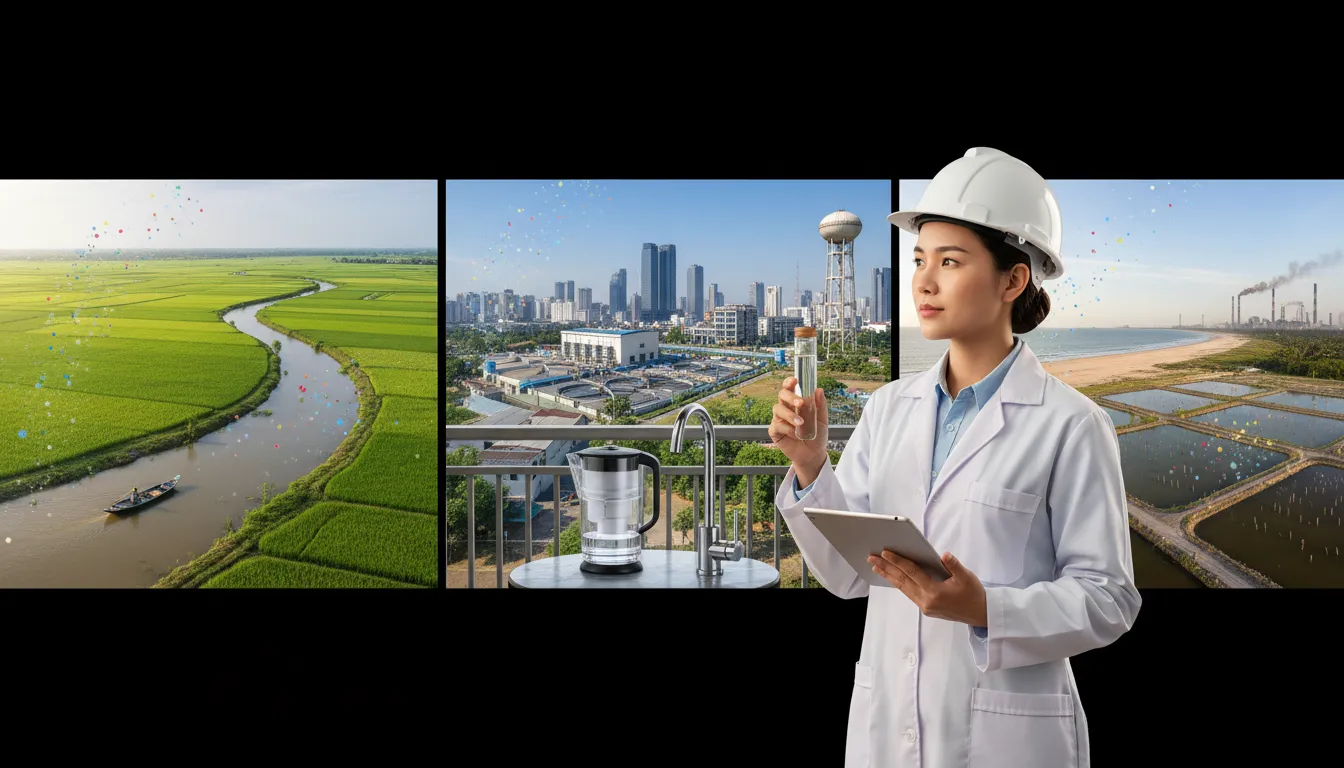
This interview-style guide explains practical, technically accurate information about drinking water in Vietnam: where it comes from, which contaminants matter locally, how municipal and household treatment works, and what families and businesses can do to reduce risk. Answers are concise and action-oriented so you can use them to evaluate your tap, well, or bottled drinking water and choose appropriate testing or treatment.
Table of Contents
- Why this is relevant for Vietnam
- About the interviewee
- Practical checklists: What to do this week to improve your Drinking Water
- Pitfalls, trade-offs and things to watch for
- Policy and community actions to improve Drinking Water at scale
- Summary: Key takeaways for safe Drinking Water in Vietnam
- Frequently asked questions (FAQ)
- Final practical resources and next steps
- Related resources on transport and tourism
Why this is relevant for Vietnam
Vietnam’s water landscape combines rivers, deltas, coastal aquifers, and growing cities. That diversity creates a mix of drinking water challenges: microbial contamination, seasonal salinity, industrial pollutants, agricultural runoff, naturally occurring arsenic and fluoride in some groundwater, and rising concern about pharmaceuticals and microplastics. Ensuring safe drinking water affects health, livelihoods, and resilience to climate-driven changes such as drought and salt intrusion.
About the interviewee
SEO FuNy Expert is a chemical engineer specializing in water and wastewater treatment. Her work covers technical selection of treatment systems, pilot testing, and practical guidance on point-of-use options. The answers below translate engineering concepts into steps Vietnamese households, communities, and local water managers can apply.
What are the primary sources of drinking water used across Vietnam?
Urban areas typically get drinking water from surface sources—rivers, reservoirs, and canals—treated at municipal plants and distributed through pipe networks. Many cities supplement with groundwater from shallow or deep wells. Rural households often rely on shallow wells, deep tube wells, dug wells, surface water (rivers or ponds), or small local treatment systems. In coastal and delta regions, freshwater sources face seasonal salinity intrusion, so some communities rely on bottled water or localized desalination during the dry season.
Which contaminants are the highest priority in Vietnam’s Drinking Water?
Priorities vary by region, but the most common concerns are:
- Microbial contamination (E. coli, coliforms, bacteria, viruses): widespread in poorly protected sources and distribution systems. This is the main immediate health risk for Drinking Water.
- Salinity and chloride: Seasonal saltwater intrusion affects coastal and Mekong Delta supplies, making some drinking water unpalatable or unsafe for infants and those with health conditions.
- Arsenic: Naturally occurring arsenic occurs in some groundwater aquifers in parts of the Red River and Mekong deltas and requires targeted testing and treatment for drinking water wells.
- Nitrates and agricultural pollutants: Excess fertilizer and livestock waste increase nitrate in shallow wells, especially in agricultural zones.
- Industrial chemicals and heavy metals (lead, mercury, cadmium): hotspots near industrial zones or mining require local testing for Drinking Water.
- Emerging contaminants—pharmaceuticals, PFAS-like compounds, and microplastics—are increasingly detected in surface water and treated effluent; the long-term human health impacts on drinking water are still under study.
How are municipal drinking water plants in Vietnam generally designed?
Typical municipal drinking water treatment follows these steps:
- Intake and screening—coarse debris removed from river or reservoir water.
- Coagulation and flocculation—added chemicals (alum, iron salts, or polymers) make tiny particles clump together into larger flocs.
- Sedimentation or flotation—flocs settle out or are floated to the surface and removed.
- Filtration—Sand, multimedia, or activated carbon filters remove remaining particles and some organic chemicals that affect taste and odor.
- Disinfection—chlorine is the most common disinfectant because it leaves a residual that protects pipes; some plants use ozone or UV for additional control.
- Distribution—Treated drinking water is pumped through a distribution network; maintaining residual disinfectant and preventing leaks is essential to maintain drinking water quality for consumers.
Do treatment plants remove everything that could be in Drinking Water?
No. Conventional municipal treatment targets turbidity, bacteria, and many organic compounds. It does not reliably remove all heavy metals, arsenic, fluoride, some pesticides, pharmaceutical residues, or certain industrial contaminants. Where those are a local concern, plants must add targeted processes (e.g., adsorption for arsenic, ion exchange or reverse osmosis for salts and many dissolved contaminants, and advanced oxidation for some pharmaceuticals).
What role does groundwater play for drinking water in Vietnam, and what problems are common?
Groundwater supplies many rural households and some cities. Advantages include lower immediate microbial contamination if wells are properly constructed and protected. Common problems for drinking water from wells include:
- Naturally occurring arsenic and fluoride in some aquifers.
- High iron or manganese that affects taste and staining.
- Salinity or chloride from seawater intrusion in coastal aquifers.
- Surface contamination: shallow wells can be contaminated by latrines, livestock, or surface runoff.
- Over-extraction leading to lowered water tables and increased contamination risk.
How should households in Vietnam test their Drinking Water?
Testing depends on source and concerns. Minimum recommended tests:
- Microbial test for E. coli/total coliform—essential for any untreated or intermittently supplied drinking water.
- Electrical conductivity or chloride test—quick indicators of salinity issues for coastal or delta households.
- Arsenic and nitrate tests—for wells, especially in agricultural areas or known arsenic regions.
- Basic metals screening—lead, iron, and manganese near industrial areas or older plumbing.
- pH and turbidity—routine indicators of water condition and filter performance.
Local testing options include provincial or university labs, accredited private labs, and NGO-supported field testing. Municipal water providers may publish periodic water quality summaries—contact your local water company or People's Committee to request recent drinking water reports.
What household drinking water treatments are practical and effective in Vietnam?
Choice depends on the contaminant profile, budget, and maintenance capacity. Practical options:
- Boiling—kills bacteria and many pathogens. It does not remove salts, heavy metals, or chemical contaminants. Use for emergency microbial control or when the only concern is bacteria.
- Chlorination—cheap and effective for disinfection of drinking water; chlorine tablets or liquid bleach (appropriate dosing) can disinfect household quantities. Chlorination does not remove arsenic, nitrate, or salts, and creates disinfection byproducts if organic load is high.
- Ceramic and biosand filters—low-cost, locally maintainable filters that remove bacteria and suspended solids for drinking water; good for rural households but not effective for dissolved chemicals.
- Activated carbon (charcoal) filters—improve taste and remove chlorine and some organic chemicals from drinking water. They do not remove most dissolved salts or heavy metals unless specially treated.
- Reverse osmosis (RO)—highly effective at removing salts, arsenic, fluoride, heavy metals, and many organics in drinking water. RO produces reject water and requires electricity, maintenance, and cartridge replacement; the total cost can be high for whole-house use.
- UV disinfection—kills bacteria and viruses in drinking water without adding chemicals; does not remove dissolved contaminants and provides no residual protection in distribution.
- Solar disinfection (SODIS)—clear bottles exposed to sunlight for several hours can reduce microbial load in drinking water; suitable for emergency or small-scale rural use where turbidity is low.
How should someone choose a drinking water filter or system in Vietnam?
Use this decision checklist:
- Test the water first. Buy a filter that targets the contaminants detected (e.g., RO for high salts/arsenic; activated carbon for chlorine and taste; ceramic for bacteria).
- Check validated performance. Seek product performance data from accredited labs or reputable manufacturers. If no certification is available, prefer suppliers with transparent test reports and local service.
- Consider maintenance and spare parts. Filters fail when cartridges are not replaced; factor in annual running costs.
- Think about disposal and waste. RO produces reject water—plan for safe, legal disposal. Used cartridges and plastic bottles should be managed to avoid environmental harm.
- Match capacity to household needs. Small pitchers suit two people; RO systems with storage tanks are better for larger families.
Are bottled water and sachet water safe alternatives in Vietnam?
Bottled and sachet water are widely used. Advantages: convenience and often reliable microbial control. Warnings for Drinking Water:
- Quality varies by brand and local regulation enforcement. Some small producers may cut corners.
- Plastic waste: single-use bottles and sachets generate major pollution if not collected and recycled.
- Cost: Long-term bottled drinking water is expensive compared to household filtration.
- Storage and heat exposure: bottles left in hot conditions can leach chemicals; reuse of single-use bottles increases risk.
If you choose bottled drinking water, buy from reputable brands, avoid reusing single-use bottles for long-term storage, and prefer larger refillable containers with proper cleaning where possible.
How effective is boiling compared to filtration for drinking water in Vietnam?
Boiling is highly effective against bacteria, viruses, and protozoa if done correctly (rolling boil for at least 1 minute at sea level; longer at high altitudes). Boiling does not remove chemical contaminants like arsenic, fluoride, salts, pesticides, or heavy metals. Filtration effectiveness depends on the filter type: ceramic or biosand remove microbes and turbidity, activated carbon treats taste and organics, while RO and ion exchange remove dissolved chemicals. For many Vietnamese households, combining techniques is common: boiling or chlorination for microbial safety plus activated carbon/RO to address chemicals if needed.
How should communities handle seasonal salinity in drinking water, especially in the Mekong Delta?
Seasonal salt intrusion requires a mix of short- and long-term solutions for Drinking Water:
- Source switching—use less-saline surface reservoirs or deeper aquifers during the dry season.
- Blending—mix higher-quality low-salinity water with brackish sources to meet drinking water standards.
- Desalination and RO at community scale—effective but requires energy and maintenance; small community RO plants can supply drinking water if well-managed.
- Rainwater harvesting—capture and store rainy-season freshwater for dry-season drinking water use, combined with simple treatment.
- Policy and upstream management—basin-scale water releases and river flow management can reduce salinity intrusion if coordinated.
Is fluoride in drinking water a concern in Vietnam?
Fluoride occurs naturally in some aquifers. Low fluoride (at optimal levels) can reduce dental cavities, while excessive fluoride causes dental fluorosis in children and, in extreme cases, skeletal fluorosis. The need for adding fluoride to drinking water varies by region. The correct approach is site-specific testing and public health guidance. If well tests show high fluoride, use filtration options that reduce fluoride (RO, activated alumina) for drinking water used by children.
What about pharmaceuticals and chemicals in drinking water—should people worry?
Pharmaceutical residues and certain industrial chemicals are increasingly detectable in surface water and sometimes in treated drinking water at trace levels. Current evidence suggests trace concentrations usually pose low immediate risk to human health, but ecological impacts (fish, amphibians) and long-term low-dose effects are less well understood. For drinking water safety, focus on demonstrated risks first (microbes, arsenic, salinity). If you have specific concerns, choose targeted treatment (e.g., advanced oxidation, activated carbon, RO) and advocate for source control: proper disposal of medicines, improved wastewater treatment, and stricter industrial discharge controls.
How can households reduce contamination entering drinking water sources?
Simple actions make a big difference:
- Do not dispose of medicines, paints, solvents, or pesticides down the drain. Use community collection points or follow municipal hazardous waste guidance.
- Keep latrines and livestock away from wells and springs; protect wellheads with sealed covers and drainage.
- Properly discard cooking oils and fats—do not pour grease into drains that lead into treatment systems.
- Limit pesticide and fertilizer use near water sources; practice buffer strips and erosion controls to reduce runoff into drinking water sources.
- Support local campaigns for safe sanitation and stormwater management to reduce contamination of drinking water intakes.
What should businesses or hotels in Vietnam do to ensure safe drinking water for guests?
Businesses should adopt a risk-based water safety approach:
- Map water sources and distribution networks used onsite for Drinking Water.
- Test for key parameters regularly: microbial indicators, residual chlorine, conductivity/salinity, and any local chemical risks (e.g., arsenic, lead).
- Install appropriate point-of-entry or point-of-use treatment (UV + activated carbon for microbial and taste control; RO where dissolved chemicals or salinity are an issue).
- Maintain treatment systems: train staff for routine maintenance, replace cartridges and UV lamps on schedule, and keep service records.
- Provide clear guidance to guests: for vulnerable populations, offer bottled or treated drinking water; post notices if water quality is compromised.
How often should public or household drinking water be tested?
Frequency depends on risk and regulatory requirements. Minimum suggestions:
- Municipal systems—continuous online monitoring for turbidity, periodic testing for E. coli and residual chlorine (daily to weekly), and chemical testing (monthly to yearly depending on parameter and local risk).
- Community systems and wells—microbial tests at least quarterly, and after any flooding or suspected contamination. Chemical tests (arsenic, nitrate, salinity) at least annually, more often if there is known risk or changing land use.
- Household point-of-use systems—monitor filter performance by tracking flow rate and taste, and replace cartridges per manufacturer guidelines; send water to a lab for verification annually or if illness is suspected.
Which common myths about drinking water should people stop believing?
Clear up these misconceptions:
- Myth: Bottled water is always safer than tap drinking water. Not necessarily. Quality varies, and bottled water can be contaminated or mishandled. Bottled water is useful as a stopgap, not always a superior long-term solution.
- Myth: If tap water tastes fine, it is safe. Taste does not reveal dissolved chemicals like arsenic, fluoride, or nitrates. Testing is the only reliable way to know.
- Myth: Boiling removes all contaminants. Boiling kills microbes but does not remove salts, heavy metals, or many chemicals from drinking water.
- Myth: Flushable wipes and grease are harmless. These create blockages and complicate wastewater treatment; they indirectly affect drinking water quality downstream.
Practical checklists: What to do this week to improve your Drinking Water
Household checklist (urban piped Drinking Water)
- Request a recent water quality report from your water supplier.
- Test for E. coli and residual chlorine if the water supply is intermittent or if you notice odors.
- If you are chlorine sensitive, let a jug of treated drinking water sit open overnight or use an activated carbon filter to remove residual taste.
- Inspect indoor plumbing for lead or corroded pipes; flush taps after long idle periods.
- Choose a certified point-of-use filter if a specific contaminant is documented in your area.
Household checklist (well or surface source Drinking Water)
- Test for microbial contamination immediately and after heavy rains or floods.
- Test yearly for arsenic, fluoride, nitrates, and salinity if in a risk area.
- Protect the wellhead, install a sanitary seal, and provide proper drainage away from latrines or animal pens.
- Install appropriate treatment: ceramic/UV for microbes; RO or ion exchange for dissolved chemicals.
- Keep a log of maintenance and cartridge replacements for any filter used on Drinking Water.
Pitfalls, trade-offs, and things to watch for
Cartridge replacement and hidden costs
Many consumers buy filters without budgeting for annual cartridge replacements, service, electricity (for RO and UV), and disposal of spent cartridges. These recurring costs can exceed the initial purchase price and cause systems to fall into disrepair, reducing drinking water safety.
RO waste and water scarcity
Reverse osmosis systems create reject water that can be 10-50% of feed flow. In regions facing water scarcity, evaluate whether community RO is sustainable. Use reject water for non-potable uses when safe (toilet flushing, irrigation) to improve efficiency for drinking water systems.
Chlorine vs. no-chlorine distribution
Chlorine leaves a protective residual in pipes but can form disinfection byproducts if organics are present in drinking water. Ozone and UV provide strong onsite treatment but no residual protection in the distribution network. The best choice depends on distribution quality and source water organics; in Vietnam, many municipal systems use chlorine because distribution networks are long and intermittent supply is common.
Policy and community actions to improve drinking water at scale
Strengthen source protection
Protecting catchments, enforcing industrial discharge limits, and improving sanitation upstream reduce treatment burden and the risk of contamination reaching drinking water intakes.
Upgrade wastewater treatment
Improved wastewater treatment reduces the load of pharmaceuticals, nutrients, and pathogens that end up in rivers used for drinking water. Investing in tertiary treatment and source-separated sanitation in urban areas helps protect downstream drinking water supplies.
Support monitoring and transparency
Regular, publicly available drinking water quality reporting builds trust and lets consumers and businesses make informed choices. Encourage local authorities to publish accessible summaries and timely alerts when drinking water standards are breached.
Summary: Key takeaways for safe drinking water in Vietnam
- Drinking water safety in Vietnam is region-specific: coastal salinity, groundwater arsenic, microbial contamination, and industrial pollution are the top concerns.
- Test your source before choosing a treatment. Microbial safety is a priority; dissolved chemicals require alternative solutions.
- Combine technologies when needed: disinfection (boil/chlorine/UV) plus filtration (ceramic/carbon/RO) covers a broad range of drinking water risks.
- Maintenance, cartridge replacement, and correct disposal of wastes are essential for long-term drinking water safety.
- At the community level, source protection, improved wastewater treatment, and transparent monitoring yield the largest gains for drinking water quality.
Frequently asked questions (FAQ)
Is tap drinking water in Vietnam safe to drink?
It depends on the location and the local water utility. Many urban systems provide treated drinking water that meets national standards at the plant, but distribution issues, intermittent supply, and old pipes can compromise quality at the tap. In rural areas, wells and surface sources often require treatment before use as drinking water. The safest approach is to check local test results and apply household treatment as required.
Will boiling drinking water remove arsenic?
No. Boiling kills microbes but does not remove dissolved chemicals such as arsenic, fluoride, or salts from drinking water. Filters such as reverse osmosis, ion exchange, or specialized adsorbents are needed for arsenic removal.
How can I check if my well drinking water has arsenic?
Send a sample to an accredited laboratory for arsenic analysis or use validated field test kits where available. Your local health department, university, or an NGO working on safe drinking water can advise on testing services and sample collection procedures.
Does a household RO system remove bacteria and viruses from Drinking Water?
RO membranes remove the vast majority of bacteria, protozoa, and many viruses because of their petite pore size, but if the system or storage tank is contaminated downstream, microbes can regrow. Combine RO with disinfection (UV or periodic chlorination) for drinking water safety and maintain system hygiene.
Are ceramic filters a practical solution for rural drinking water?
Yes, for microbial reduction and turbidity in rural drinking water supplies with low dissolved chemical contamination. Ceramic filters are low-cost, locally maintainable options that can remove bacteria and protozoa but offer limited protection against dissolved contaminants like arsenic, fluoride, or nitrates.
Does activated carbon remove chlorine taste from Drinking Water?
Yes. Activated carbon is effective at removing chlorine, improving taste, and removing many organic compounds that cause odor. It does not remove salts, arsenic, or most heavy metals from drinking water.
What is the best immediate action if my drinking water smells or looks strange?
Stop drinking the water, avoid using it for cooking or brushing teeth, and use bottled or safely treated water. Contact your water supplier or local authorities, and arrange for microbial testing. For short-term safety, boil or chlorinate water if chemical contamination is not suspected.
How can communities reduce salinity in drinking water supplies?
Options include protecting freshwater intakes upstream, storing rainwater in the wet season, blending freshwater with brackish sources, community-scale desalination (RO) with proper energy supply, and basin-scale water release management to reduce saline intrusion.
Final practical resources and next steps
If you want to act this month to improve drinking water at home or in your community, start here:
- Identify your water source and request the latest local water quality data from your water supplier or People's Committee.
- Order or locate a lab capable of testing for E. coli, arsenic, nitrate, and conductivity (salinity).
- Based on test results, pick a treatment option from the checklists above and budget for maintenance.
- Work with neighbors to protect shared wells and source catchments from pollution and livestock intrusion.
- Advocate with local authorities for transparent drinking water reporting and investments in wastewater treatment and source protection.
Closing note
Safe, reliable drinking water in Vietnam is achievable when communities combine local knowledge, regular testing, and appropriate technology choices. Prioritize microbial safety first, then address chemical and salinity problems with targeted treatment. Small household actions (source protection, proper disposal of medicines and grease, maintaining filters) and community investments (wastewater upgrades, catchment protection) together deliver the biggest improvements in drinking water quality and public health.
Related resources on transport and tourism
Transport, tourism, and road-safety issues can indirectly affect drinking water quality through stormwater runoff, plastic waste, emergency response needs, and pressure on local infrastructure. For further reading on these overlaps, see the following resources:
- Overtourism—discusses how tourist pressure strains local services and waste systems that can impact water quality.
- Predictive travel—covers how predictive tools inform planning and reduce infrastructure stress that can influence watershed health.
- Traffic management—looks at strategies to reduce congestion and pollution that contribute to runoff and contamination risks.
- Road rage—examines behavioral factors in driving safety, relevant for emergency response planning that affects utilities and water services.
- Traffic accidents—considers accident impacts and associated pollution that can reach waterways.
- Future of travel—perspectives on evolving travel patterns and infrastructure planning with implications for local environmental stress.
- Weather tips—guidance on travel in adverse weather; extreme weather events influence runoff and drinking water risks.
- Self-driving—looks at autonomous vehicles and planning considerations that can change urban infrastructure pressures on watersheds.
These resources provide additional context on how mobility, tourism, and planning intersect with water resource protection and can be useful when thinking about integrated local strategies for safe drinking water.
SEO is LIVE |
|
Take a look at this really cool SEO websites |
| Do NOT Click me |
Comments
Post a Comment