Interview with SEO FuNNky Expert, Escape Room Designer and Game Master — Practical Strategies for Every Escape Room Player
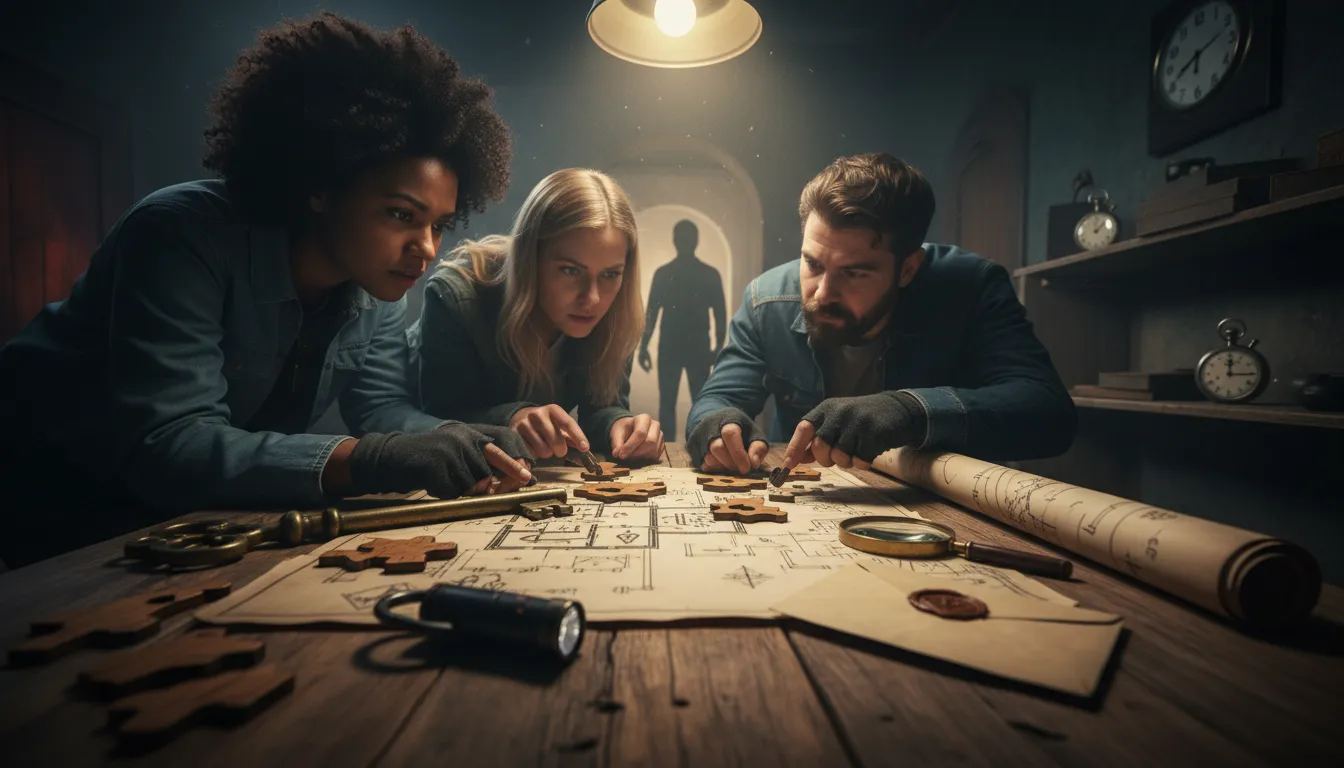
Looking for tips, plans, and what might happen in an escape room? This guide is set up like an interview. It gives clear answers on how escape rooms work, how to pick one, and steps to help you solve puzzles faster. It does not matter if this will be your first time or if you want your team to do better. This guide gives you good advice, lists to follow, and ideas that work for all types and levels of escape rooms.
Table of Contents
Core concepts: what an escape room is and why design matters
For owners and designers: building a fair and fun escape room
About the interview
SEO fuNNky Expert is a skilled escape room designer. He is also a former game master. He has made more than 50 escape rooms in different cities. The Q&A below talks about things many players do, how to make good puzzles, and top ideas for running rooms well. This helps both players and organizers to get good results.
Core concepts: what an escape room is and why design matters
What exactly is an escape room, and what should a first-time player expect?
An escape room is a timed game you play with a group. You solve a set of puzzles and try to finish a goal. This goal is often to get out, or finish a task, before time runs out. Most games last about 45 to 60 minutes.
You will find yourself in a room with a special theme. There are hands-on and thinking puzzles. There is also a short talk about safety and the rules. A game master gives tips if you ask.
Some rooms feel high-tech, and some feel simple. A few focus more on the feel of the story, while others want you to use your hands and think a lot. For new players, you will need to work as a group, look for clues, keep calm, and keep looking around to have fun.
Why does escape room design matter?
Design guides how players move through the game, how hard it is, and how much they enjoy it. A good designer mixes search tasks with puzzle-solving. They set up a clear way forward, so people feel happy when they get rewards. Designers add safety nets, so players do not get stuck all the way with no way out. Design also decides where to hide clues, how many puzzles happen at once, and how the story works with the game. A good escape room feels fair. Clues feel right when you look back. The room gives people different ways to move ahead if their team gets stuck.
Types of escape rooms and how to pick the right one
What are the main types of escape rooms, and how do they differ?
Escape rooms can be sorted by theme and how they work:
Classic puzzle rooms: Lock-and-key, pattern puzzles, codes, and moving things with your hands. There is little technology, but you have to think a lot.
Immersive story rooms: There is a strong story feel, role-play, and clues that fit into the setting. Every puzzle is part of the main plot.
High-tech rooms: These use sensors, motors, video/AR, and tricks that work on their own. They look cool, but the rooms can stop working if the tech does not work.
Horror rooms: These rooms are meant to scare and feel tense. There may be extra safety and age rules.
Outdoor or scavenger escape games: These take place in the real world. They use public spaces, GPS, and puzzles you solve at different spots.
When you are choosing, think about the group size, the age of everyone, and how well people can move. Moreover, think about if you want a story or just the puzzles. If you want an escape room that is good for beginners, look for one that says “family” or “easy” next to how hard it is. You should read some recent reviews to check if the room is good and read about their hint policies too.
How does difficulty scale, and how should I decide on a difficulty level?
How hard a puzzle is will be about how tough the puzzle is, how many puzzles are happening at the same time, and if there are any clues that are meant to be tricky. Make your pick based on your experience and who is in your group.
Beginner: 2–4 players, puzzles are in a row, hints are given often.
Intermediate: 3–6 players, some puzzles can be worked on at the same time, only a few hints are suggested.
Advanced: 4–8 players, many puzzles mixed together, very few hints with more steps to think through.
For groups where people have different skill levels, you can pick intermediate. Ask the staff about how hints work. A good game master will be able to change how hints are given. This way, everyone can enjoy the game and still feel challenged, but the answers won't be spoiled.
Practical strategies for solving any escape room faster
What is the optimal team size and roles for an escape room?
The best team size is often 4 to 6 players. If there are too few, the tasks take more time. If there are too many, people can start to get confused. It is important to give out roles fast.
Searchers (2): Scan the room very well for objects, labels, and small markings.
Puzzle solvers (2): Try to break codes, see patterns, and think through things after you find items.
Coordinator/Note-taker (1): Keeps track of clues already used, codes people have tried, and keeps all leads written down on a main whiteboard or paper.
Tool handler/Connector (1): Takes care of keys, magnets, and other small parts. Tries putting pieces together to see where they go.
Roles should move around if things slow down. Giving out jobs helps stop more than one person working on the same thing. This makes sure people work at the same time to get more done.
What should players do in the first 5–10 minutes?
Kick off with a rapid, systematic sweep:
Look over the walls, furniture, props, and behind or under any objects.
Find clear puzzles and any boxes that are locked. Write them down in your main notepad.
Pick up each small item like papers, cards, magnets, or strange tools. Put all of them in one spot where everyone can see.
Read every set of instructions or words on screens the whole way through. Numerous rooms hide useful clues in text.
Choose one person to watch the game’s timer and take care of asking for hints.
If people start looking early, they can find clues. This gives puzzle solvers something to work on. At the same time, people can keep searching still hidden other places.
How should teams handle hints and when to ask for them?
Treat hints like tools that help you keep going. They are not failures. Use hints if:
You have used 8 to 12 minutes on the puzzle, but there are still no new ideas. No one in the room can find where to start.
Plenty of people in the group are stuck at the same locked spot.
There is not much time left, and you can actually finish the puzzle if you get a little help about which way to go.
Ask for hints that point you in the right way instead of giving you the full answer. A good rule is to give one hint to start, then give a bigger clue or part of an answer only if you need to. Keep a list of hints used so the team can change plans and what matters most.
What common puzzle types should players recognize quickly?
Many rooms use the same types of puzzles again and again. When you know these, you can solve them faster.
Combination locks: The codes here use numbers or letters. These can come from numbers you see, special dates, or text that has been hidden in a simple way.
Pattern matching: You have to use shapes that go to certain spots on a grid, use a certain order, or move things in a certain way.
Logic puzzles: You need to figure it out with clues about several things (like three people, three items, and three places).
Physical assembly: Some shapes must fit together, use magnets, or need tools to go into a device to open the next part.
Binary/On-Off puzzles: You work with two choices that stand for letters or numbers. A lot of the time it is a 1/0 style code.
Audio/video clues: Recordings give you words or groups of letters you need.
UV/hidden ink: A backlight or a special tool shines on spots to show words or marks you don’t see at first.
Search-and-retrieve: Look for cards, RFID chips, or keys. You need to get them and use them in a slot or machine.
Noticing these types can help cut down on guessing. For example, when you see a row made of 1s and 0s, think about binary or a picture-like pattern instead of just a random number pad input.
How do you avoid tunnel vision and other common mistakes?
Players fall into a few predictable traps:
Tunnel vision: This is when people keep looking at only one puzzle and do not check the other easy puzzles. Solution: Every 8–12 minutes, let people switch jobs. Furthermore, keep a list that everyone can see of the spots you have not checked yet.
Overcomplicating: This is when people try to use a hard code when there is an easy way. Solution: Always try the easy code first. For example, A=1 or match numbers to letters.
Ignoring small details: Sometimes people miss signs like worn edges, odd screws, or different fabrics that can show there is a hidden spot. Solution: Let at least one person look for these hints every time you switch jobs.
Not communicating tries: This means people keep using the same wrong codes and not telling each other. Solution: Write the codes you already tried on a main sheet or on the whiteboard in the room.
Detailed tactics: decode, connect, validate
What step-by-step approach should a team use when they find a new clue?
Follow these three steps each time you find a new clue or item:
Decode (interpret): Read the clue from start to finish. Change symbols into words if you need to, listen to the sounds, and spot any group of numbers or letters that stand out. Ask yourself if you need to put the answer in right away, use the clue as a key, or if the clue is just part of something bigger.
Connect (contextualize): Put the clue with things in the room. Think about if it points to a prop, a chart on the wall, or something you found before now. Look out for things that match, like shapes, colors, or patterns that come up more than once.
Test: Try simple answers and see what happens. If you get nowhere, write down what you did, start over if you have to, and look at other things. Don’t guess codes at random unless you know for sure that your guess has something to do with the clue.
This way of doing things helps the team not waste time on guessing. It also makes it easy for people to use hints when they need them.
How should teams manage parallel puzzles?
Parallel puzzles are several puzzles you can work on at the same time. To handle them:
Put puzzles first that make new items or give you keys, cards, or pieces.
Keep an active task board with the puzzle names and where they are at: searching, solving, blocked, or solved.
Put at least two people on the best leads, and one person on rotation and note-taking.
Tell the group right away when you find something—a piece from one puzzle might be what you need for another.
Checklist: what to bring and how to prepare
What should I bring to an escape room?
Most places will give you all that you need. But, you should still bring or get ready for:
Wear comfortable clothes and closed-toe shoes when you are in an escape room.
Bring your glasses or contacts if you need them, because poor eyesight makes it challenging to find small things.
Make sure your phone is charged for photos after the game or to get directions. Do not use your phone during the game unless it is allowed.
Bring some cash or a card to pay a tip or buy something if they sell anything at the place.
Come in with a good attitude and be ready to work with others—do not try to do everything by yourself.
How should a team warm up before the game?
Get there 10 to 15 minutes early. Use the time before the game to:
Ask the staff about the hint rules, camera watching, and safety steps.
Find out if the props can be touched or are not to be used.
Choose who will do which job and who will ask for hints. This can help make choices easier.
Safety, etiquette, and accessibility
What safety and etiquette rules should players follow?
Common rules include:
Do not try to open props the wrong way or take off fixtures by yourself. If something is stuck, ask the staff for help. Many items are made to come off only in a certain way.
Respect room size limits. Do not climb on the furniture unless the game tells you that you can.
Watch out for jump scares and when people may touch you in scary rooms. If you feel uneasy, tell the staff before the game starts.
Keep the room clean and give all loose pieces back to the game master when you finish.
Are escape rooms accessible for players with mobility or sensory limitations?
Accessibility is not the same everywhere. Many places now have:
Rooms have fewer physical tasks and more puzzles that use thinking skills.
Private bookings help you set your pace and feel comfortable.
Staff help and changed puzzles are offered for players who have limited movement or feel more with their senses.
Always call or talk to the venue before you book. You can ask about what the place can do for you. A good team at the venue will often be able to change the game, give more hints, or make things easier, so everyone can join in.
For owners and designers: building a fair and engaging escape room
What are the design principles for a satisfying escape room?
Designers should prioritize:
Clarity: Each clue should help you move to the next step in a clear way. A clue should not be confusing. If something is not clear, it should make people notice a pattern, not just take a guess.
Flow: Give players many places to start and several puzzles at the same time. This way, the group does not get stuck with nowhere to go.
Redundancy: Give more than one clue for big parts of the game. This way, if the team misses something, they can still move forward without getting stopped.
Fail-safes: Make a safe and quick way to open any important lock if the group is really stuck or if something stops working right.
Playtesting: Try the game with groups that have different skill levels. This helps find hard spots and lets you change hints, so the game is better for all.
How should technology be integrated into an escape room?
Use tech to make the show feel bigger and more real. The main thing is not to let tech take the place of good puzzles. When you add tech:
Make sure there is a backup in place, so if one device stops working, the game does not stop.
Give player feedback right away. If taking the right step should show something, it must be clear.
Use automation when handling big chains of events, but let the main puzzles feel real. Using your hands is fun and something you remember.
Post-game: debriefing, learning, and improvement
What should a team do after the game to learn and improve?
Follow a quick debrief routine:
Celebrate wins and quickly write down what worked well.
Find one mistake or thing you missed, and think about how you will not make this mistake again. It could be poor search work or weak talk with the group.
Get feedback from the staff. A good game master will tell you about clues you missed and other ways you could have solved things.
Switch roles in the next game so you can get better at different skills—one person who is good at puzzles can try being a search expert next time.
Pitfalls and edge cases
What are common reasons teams fail to escape even when close?
Frequent failure points include:
Losing an important thing near the end and not going back over earlier places you looked.
Focusing too much on a puzzle that is almost complete and not checking new content that you got from another puzzle you just solved.
Using hints the wrong way—using too few hints and getting stuck, or using too many and missing out on the fun and learning.
Not thinking about the most simple meaning of a clue because it seems too clear to be right.
How do you handle technical failures or lost props mid-game?
If the tech stops working or a prop is missing, right away tell the game master using the in-room communication method. Most places have steps they follow to address the problem from far away or send someone in to help. Do not try to take apart any machines. This can turn off safety systems and make fixing things take more time.
Practical examples and mini-checklists
10 quick behaviors that increase your chance of escaping
Wear comfortable shoes and make sure you can see clearly.
Look everywhere. Check inside books, behind frames, and under cushions.
Bring all found things to one spot for everyone.
Keep a visible list showing which codes you tried and when you used hints.
Give roles to everyone. Change them every 10 to 12 minutes.
Try easy matches first. (A=1, color to number, position to number).
If stuck, ask for hints early. Use hints that are simple and direct.
Listen to audio clues all the way. Play them again if needed, and write down the exact words.
When you open a lock, check what is inside right away before leaving.
After the game, talk as a team to remember what you learned for next time.
Checklist before booking an escape room
Make sure you know the group size and age rules.
See what the theme is and how hard or scary it will be.
Look at recent reviews to find out if the staff help you and if the clues are clear.
Ask how hints are given and what the hint rules are.
Ask for help or changes if someone in your group needs them.
Summary and final advice
Escape rooms need you to search, work with others, and think things through. The best groups search carefully, give clear jobs to each person, and follow a plan to solve each puzzle. The people who make these rooms should keep things clear. They should make sure there is a good flow and even a few backup clues. This helps players feel challenged but not feel stuck or lost.
It does not matter if you play once a year or many times each month. If you practice by changing jobs, talking better with your team, and learning about different kinds of puzzles, you will get better at the game. You will also enjoy your time even more.
FAQ
How long does a typical escape room last, and what is the usual success rate?
Most escape rooms last about 45 to 60 minutes. How often people get out depends on how hard the room is? A room for beginners may let 50 to 80 percent of people out. A room that is a bit harder has 20 to 50 percent. A really tough one has less than 20 percent who make it out. Private bookings and people who have played before can help you do better.
Can you use your phone during an escape room?
Venue rules are not the same everywhere. Most places let you have your phone to take pictures or to call someone if needed. But they do not want you to use your phone while you play because it can ruin the puzzles or take your mind off the game. Some rooms do not let you use phones at all. It is good to read the rules before you book your spot.
What happens if something in the room is stuck or breaks?
Let the game master know right away by using the system in the room. Most places can fix things from a distance or come into the room to help. They will use a manual override or help you, so the game stays safe and fair. Do not try to force any part of the game. This can be dangerous and may break the rules.
How many hints should a team use?
There is not a set number for hints. A good rule is to use 2 to 4 hints in a 60-minute game. Take the first hint when you need to get back on track. Take the second hint if you get stuck part of the way. Save any other hints for big problems that stop you from moving on. Try to ask for a hint that points you in the right way first so the game stays fun and challenging.
Are escape rooms suitable for children?
Many rooms offer options for families. These have easy puzzles and no scary parts. The age rules are different at each place. Kids under 12 may need an adult to be with them. Make sure to read the venue's age policy. Pick a difficulty and theme that is right for you.
How do you practice for escape rooms?
Try practice puzzles that make you think in new ways, search for patterns, and use timed escape kits on a table. Play with more groups, so you can try different jobs. If you improve the way you look around and speak to others, you will get the best results.
Travel and local resources
If your team travels for an escape-room outing or wants to stay longer for a city team-building event, you can use local housing and cost guides to help. To get a fast look at how much different neighborhoods cost and read more, browse through the Affordability Index.
Helpful posts and tools:
best places — shows you how cities and neighborhoods match up for moving or staying with a group.
condo index — helpful if you want short-term condos for many people to stay in.
affordable home — ways to get cheap homes to stay in.
living on budget — tips that help you and your friends or team save
For a list of other posts and guides, you can check the site's sitemap.
Comments
Post a Comment